A practical comparison for weaving businesses deciding between compressed-air and water-jet weft insertion technologies.
Air JetCompressed air
Water JetWater stream
DecisionFabric & utility based
Paramount Looms
Air Jet Loom vs Water Jet Loom in India
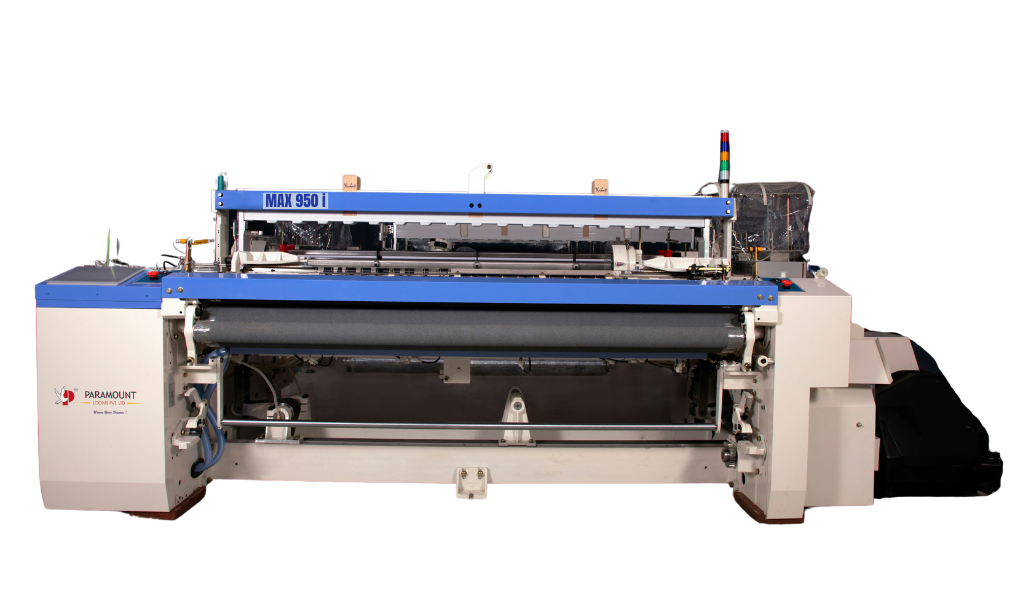
Air jet and water jet looms are both shuttleless technologies designed for high-speed weft insertion, but they use different media and suit different production conditions. Air jet looms propel the weft using compressed air, while water jet looms use a controlled stream of water.
For a project in India, the decision should consider yarn material, fabric construction, utility availability, moisture tolerance, production targets and operating economics. Paramount Looms can discuss both technologies against the actual fabric program.
Air Jet Loom vs Water Jet Loom Manufacturer in India
Paramount Looms manufactures and offers loom solutions across multiple weaving technologies, enabling machine discussions to start from the required fabric rather than forcing every project into one loom type.
Air Jet Loom vs Water Jet Loom Supplier in India
For customers in India, we can supply suitable air jet or water jet configurations after reviewing yarn, width, shedding, output and utility conditions.
Air Jet Loom vs Water Jet Loom Trader in India
Our trading and sales team helps buyers compare technical and commercial factors side-by-side so the final equipment shortlist is aligned with the intended production environment.
The Main Difference
The key difference is the weft carrying medium. Air jet weaving requires a properly engineered compressed-air system, while water jet weaving introduces water into the insertion process and is generally considered for suitable water-resistant filament yarns.
Which One Should You Choose?
Choose only after checking the actual yarn and fabric requirement. Air jet systems can be suitable for a broader range of common high-speed applications, whereas water jet systems can be highly productive for appropriate synthetic filament fabrics. Plant utilities and finishing workflow also matter.
Air Jet Loom vs Water Jet Loom Comparison
Parameter
Air Jet Loom
Water Jet Loom
Weft insertion
Compressed air
Controlled water jet
Typical yarn consideration
Application-dependent; broad high-speed use
Best considered for suitable hydrophobic filaments
Primary utility
Compressed air
Water circulation / handling
Moisture in process
No water used for weft transport
Water is part of weft insertion
Selection priority
Yarn, air demand, width, speed and fabric
Yarn water-resistance, width, drying and fabric
Best decision method
Evaluate complete production economics
Evaluate complete production economics
Frequently Asked Questions
No. The better fit depends on yarn, fabric, utilities, production requirement and operating economics.
Water jet looms are commonly considered for suitable hydrophobic filament fabrics, while air jet looms may also serve many textile applications depending on construction.
Yes. Share your fabric and yarn specifications and the team can discuss both technologies for your project.
Share your fabric, yarn, width, shedding and production requirements. Our team will help you identify a practical loom configuration for your application.